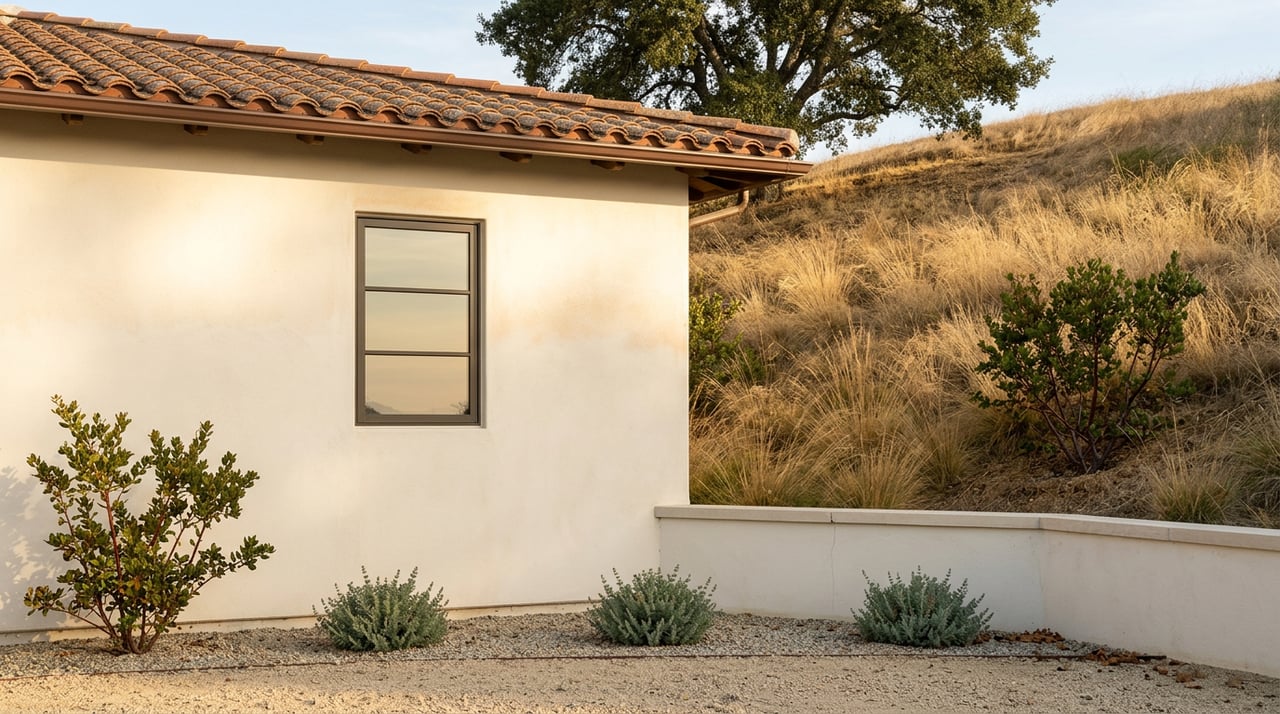
A homeowner in the Diablo foothills pulls out the paperwork from her last refinance, the one she keeps in a drawer for exactly this moment, because she is finally ready to list the house her kids grew up in. The paperwork says her lot sits in a moderate fire hazard zone. She has believed that for eleven years. She is about to find out that the map underneath her house moved without her house moving at all.
That is the story most Danville sellers in the hillside pockets do not yet know they are living. In February and March of 2025, the Office of the State Fire Marshal released the first statewide redraw of Fire Hazard Severity Zone maps since 2011, and the update was not cosmetic. It added 1.4 million new acres statewide into the two highest severity tiers, and Danville came out of that redraw as one of only twelve Contra Costa County cities confirmed to carry Very High Fire Hazard Severity Zone acreage under the new lines. A zone that did not exist on a parcel in 2015 can exist on that same parcel in 2026. The house is unchanged. The disclosure obligations attached to it are not.
The Map Nobody Told You Redrew
Fire Hazard Severity Zones are not neighborhood opinions. They are a state classification, built from fuel type, slope, historic fire behavior, and wind patterns, and the Office of the State Fire Marshal is explicit that the maps describe hazard, not a promise of what will happen to any specific house, similar in spirit to how a flood zone map describes probability rather than certainty. But probability is exactly what triggers legal obligations at the point of sale in California, and that is where the redraw stops being an abstraction and starts affecting escrow.
The Bay Area maps were part of a phased release ordered after the Southern California firestorms earlier in 2025, and Contra Costa County's version landed alongside eleven other cities in the county now carrying Very High designations. Danville is on that list. That single fact is the reason the rest of this matters for anyone getting ready to list a hillside home here in the coming months.
Why Danville Specifically Inherits the State's Line
Some towns push back on state fire maps, or negotiate local carve-outs. Danville does not have that option built into its code. The Town's own municipal code adopts the state's designation by direct reference, meaning whatever the CAL FIRE Director recommends for Very High Fire Hazard Severity Zones inside town limits becomes Danville's zone, mapped exactly as drawn. There is no separate local softening layer between the state's redraw and your listing disclosure.
Fire coverage for Danville runs through the San Ramon Valley Fire Protection District, which also serves Alamo, Blackhawk, Diablo, San Ramon, the southern edge of Morgan Territory, and the Tassajara Valley across roughly 155 square miles. That is the same district that administers the Real Estate Defensible Space Inspections.
What Changed in the Paperwork While the House Stayed the Same
The legal requirements layered on top of the map have grown in stages, and most sellers are only aware of the version that existed when they last bought a home.
The expansion effective July 1, 2025 means sellers of homes built before January 1, 2010 in a High or Very High zone must now check off, one by one, whether specific retrofits like ember-resistant vents or noncombustible gutter covers have actually been installed, not just whether they are aware of the risk. The C.A.R. disclosure form itself was revised to reflect this, and agents are advised to only use versions dated June 2025 or later.
The Inspection Buyers Will Ask About
Since July 1, 2021, selling a property in a High or Very High Fire Hazard Severity Zone has required documentation of a compliant Defensible Space Inspection, obtained through the local fire agency, in Danville's case the San Ramon Valley Fire Protection District. This is not a formality that gets waved through. It is a physical inspection of the vegetation clearance around the structure, and it needs to happen with enough lead time to fix anything flagged before a buyer's inspection contingency period starts working against you.
There is a timing consequence worth sitting with. Fire-hardening disclosures are folded into the Transfer Disclosure Statement process, and if that disclosure is delivered to a buyer after an offer has already been accepted, the buyer gets a three or five day right of cancellation depending on how it was delivered. A seller who discovers mid-escrow that the parcel now sits in a newly redrawn Very High zone is not just doing paperwork. They are handing the buyer a fresh exit door at the worst possible moment in the transaction.
A Short Checklist Before You List
- Look up your parcel's current status on the state's public Fire Hazard Severity Zone viewer rather than relying on paperwork from your last purchase or refinance.
- If you are in a High or Very High zone and your home was built before January 1, 2010, confirm your listing agent is using the fire-hardening disclosure form revised June 2025 or later.
- Schedule the Real Estate Defensible Space Inspection through the San Ramon Valley Fire Protection District before your first showing, not after you have an accepted offer sitting in escrow.
- Walk the exterior for the specific features the disclosure asks about directly: single-pane windows, gutters that collect leaves and debris, open eave vents, wood shingle roofing, and flammable landscaping within five feet of the structure.
- If you have completed any hardening retrofits over the years, gather the receipts or contractor documentation now. The July 2025 checklist asks what has actually been done, and vague memory does not hold up as well as paper.
What This Means If You Are Selling in the Blackhawk or Diablo Foothills
The quiet part of this story is that the redrawn map does not care how long you have owned the house or how many fire seasons you have watched pass without incident. A parcel that sat comfortably outside a Very High zone in 2015 can sit inside one in 2026, and the only way to know is to check the current map rather than trust the one you were handed at closing a decade ago. For sellers in Danville's hillside neighborhoods, that check now belongs at the very top of the pre-listing list, ahead of staging, ahead of photography, ahead of pricing strategy. Everything else about presenting a home well assumes the paperwork underneath it is settled. This year, for a meaningful number of Danville properties, it is not.
If you are weighing a listing in Danville's hills and want a clear read on where your specific parcel stands under the redrawn zones, or want help sequencing the inspection and disclosure timeline so it never becomes a mid-escrow surprise, The Duarte Team works this exact terrain across Danville and the surrounding Tri-Valley. Request a Free Home Valuation and we will walk the current fire zone status alongside the rest of your home's market position before you ever put up a sign.
FAQ
Does every home in Danville need a fire-hardening disclosure? No. The requirement applies specifically to properties located in a state-designated High or Very High Fire Hazard Severity Zone. Not every Danville parcel falls inside those lines, but the 2025 redraw shifted where those lines sit, so a property that was previously outside the zone should be rechecked rather than assumed clear.
What if my home was built on or after January 1, 2010? The affirmative retrofit checklist that took effect July 1, 2025 specifically targets homes built before January 1, 2010 in a qualifying zone. Newer construction is generally built to Wildland-Urban Interface codes already, which is part of why the law draws the line where it does.
Does a Very High designation affect my homeowners insurance too? The fire hazard maps and insurance underwriting are separate systems, and CAL FIRE's own guidance is careful to note the maps measure hazard rather than dictate insurance outcomes. That said, insurers do their own risk assessments, and it is worth having that conversation with your carrier well before you list rather than after a buyer's lender asks about insurability during escrow.
This article is general information, not legal, tax or financial advice. Consult a qualified professional about your situation.